
Council Rates Notice: Bringing Clarity to a Confusing System
Systemic Communication Failure
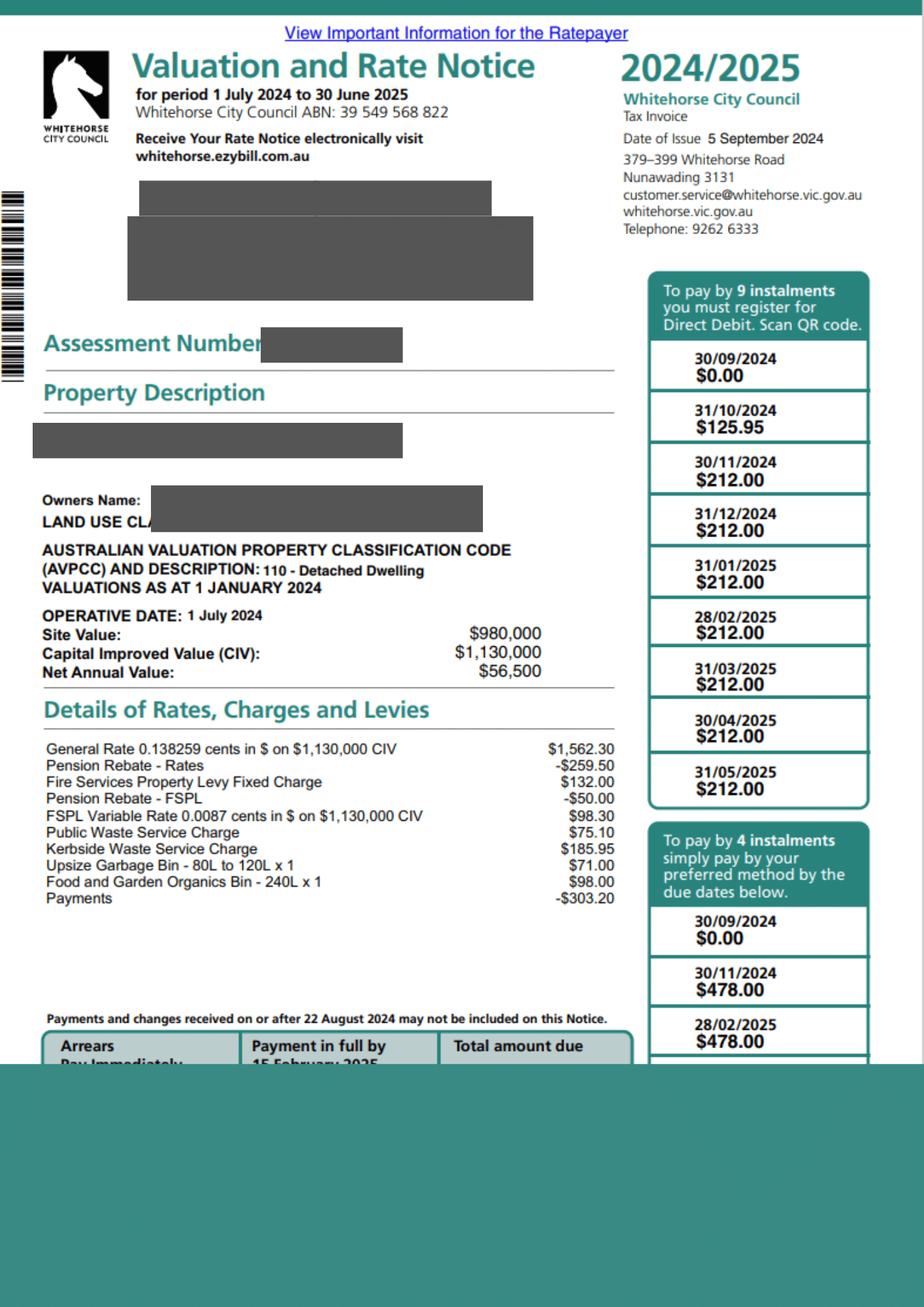
During peak rates periods, customer service teams faced 20–40+ queued calls daily, driven by repeated confusion around payment structure, due dates, and total amounts. The same questions resurfaced each cycle.
Internal teams absorbed the load through escalations and long handovers, with no change to the notice itself. A simple document had become a recurring operational bottleneck.
During peak rates periods, customer service teams faced 20–40+ queued calls daily, driven by repeated confusion around payment structure, due dates, and total amounts. The same questions resurfaced each cycle.
Internal teams absorbed the load through escalations and long handovers, with no change to the notice itself. A simple document had become a recurring operational bottleneck.
Approach
The notice was reframed as a communication system rather than a compliance document, shifting the focus from presenting information to enabling understanding. The goal was to reduce cognitive load, introduce clear hierarchy, and surface key actions immediately.
The notice was reframed as a communication system rather than a compliance document, shifting the focus from presenting information to enabling understanding. The goal was to reduce cognitive load, introduce clear hierarchy, and surface key actions immediately.
Product
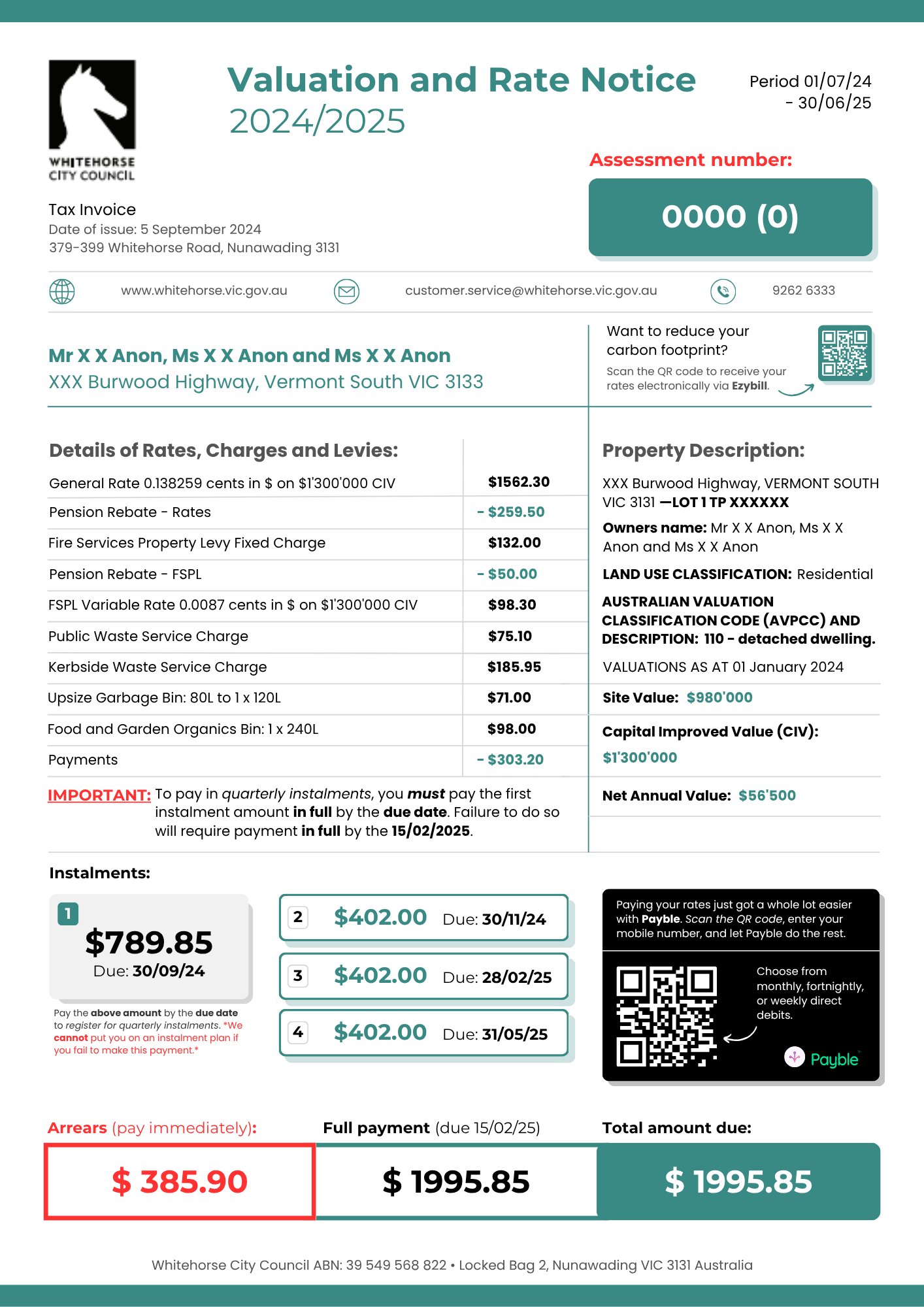
The redesigned notice prioritises clarity, structure, and trust. Rather than requiring interpretation, the notice was designed to proactively answer common questions upfront, restructuring how information is grouped, prioritised, and presented so users can quickly understand what they owe, when it’s due, and how to act.
The redesigned notice prioritises clarity, structure, and trust. Rather than requiring interpretation, the notice was designed to proactively answer common questions upfront, restructuring how information is grouped, prioritised, and presented so users can quickly understand what they owe, when it’s due, and how to act.
Outcome
The redesign was validated internally through transformation team analysis, demonstrating significant improvements in clarity, structure, and comprehension. It received strong support from senior stakeholders.
Despite this, implementation was blocked due to internal resistance and ownership constraints, highlighting a broader issue: operational problems often persist not because they are complex, but because they have been normalised over time.